Heritage homes
Old stone, old sash: a window guide for Kingston's heritage homes
If your house is designated, listed or inside the Barriefield, Market Square or Old Sydenham districts, confirm its status and talk to the City's Heritage Planning staff before any window is ordered. Council-defined maintenance is exempt from a heritage permit, so repair and reglazing are often the simplest start on old sash. A designated home may qualify for a City heritage grant, and the City's window policy is available on request.
Why Kingston is the Limestone City
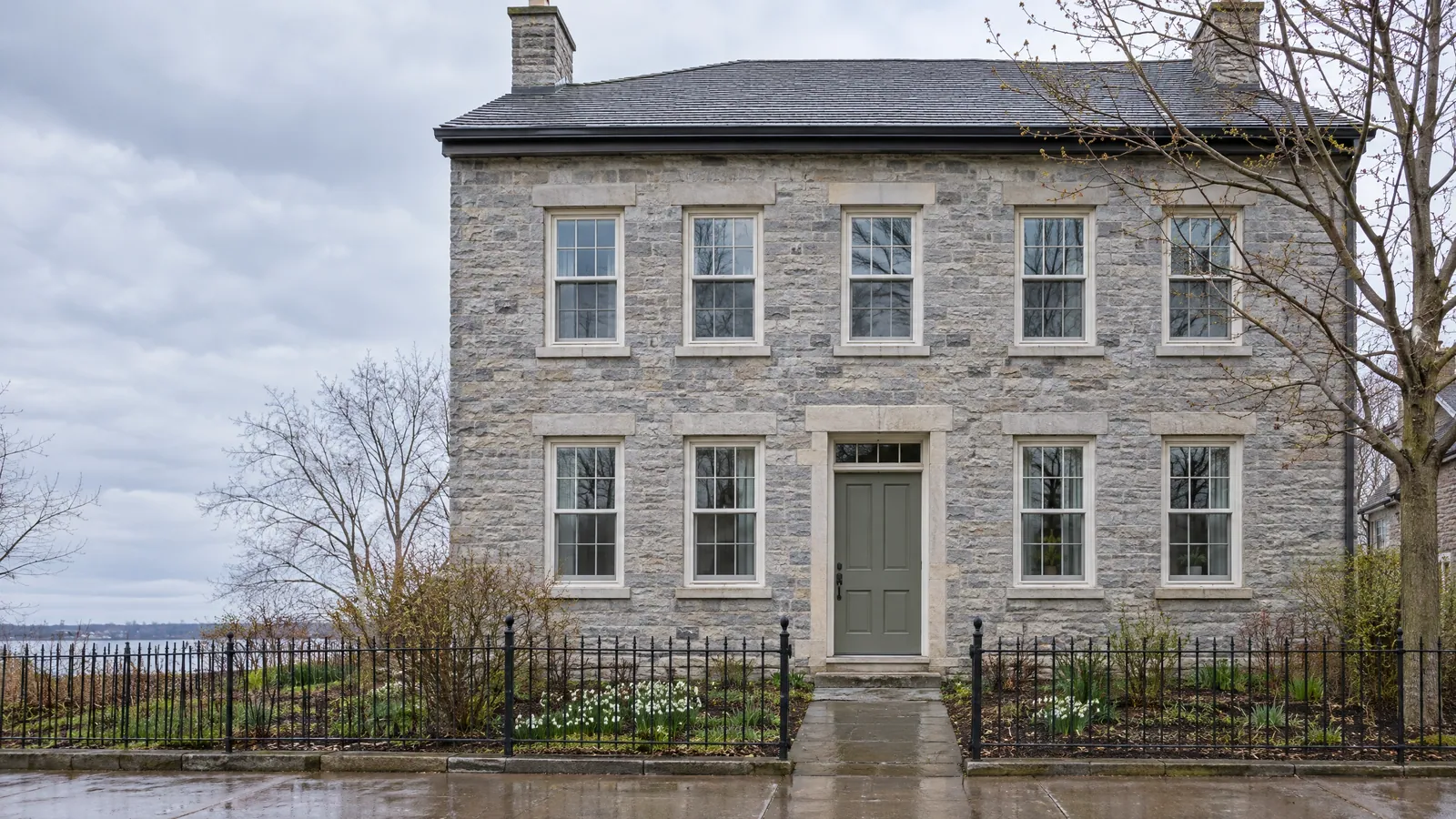
On 18 April 1840, a fire that began at the docks destroyed much of downtown Kingston. The rebuilding was done in limestone and brick, which is where the nickname comes from, and it explains the windows: many houses in the old core have thick stone walls with wood sash set into them.
That history is information, not decoration. It tells a pro to expect deep openings, stone sills, sash that may have been repaired before, and storm windows doing the winter work. The core also sits beside the Rideau Canal and Kingston's fortifications, named a UNESCO World Heritage Site in 2007.
Stone openings and old sills
Limestone changes the practical side of window work in specific ways:
- Depth. The window sits partway into a thick wall, so a new unit or storm has to be sized and finished for that depth, not just the glass.
- Out-of-square openings. Hand-laid openings are rarely square or a standard size. Expect every sash, storm and unit to be measured on its own.
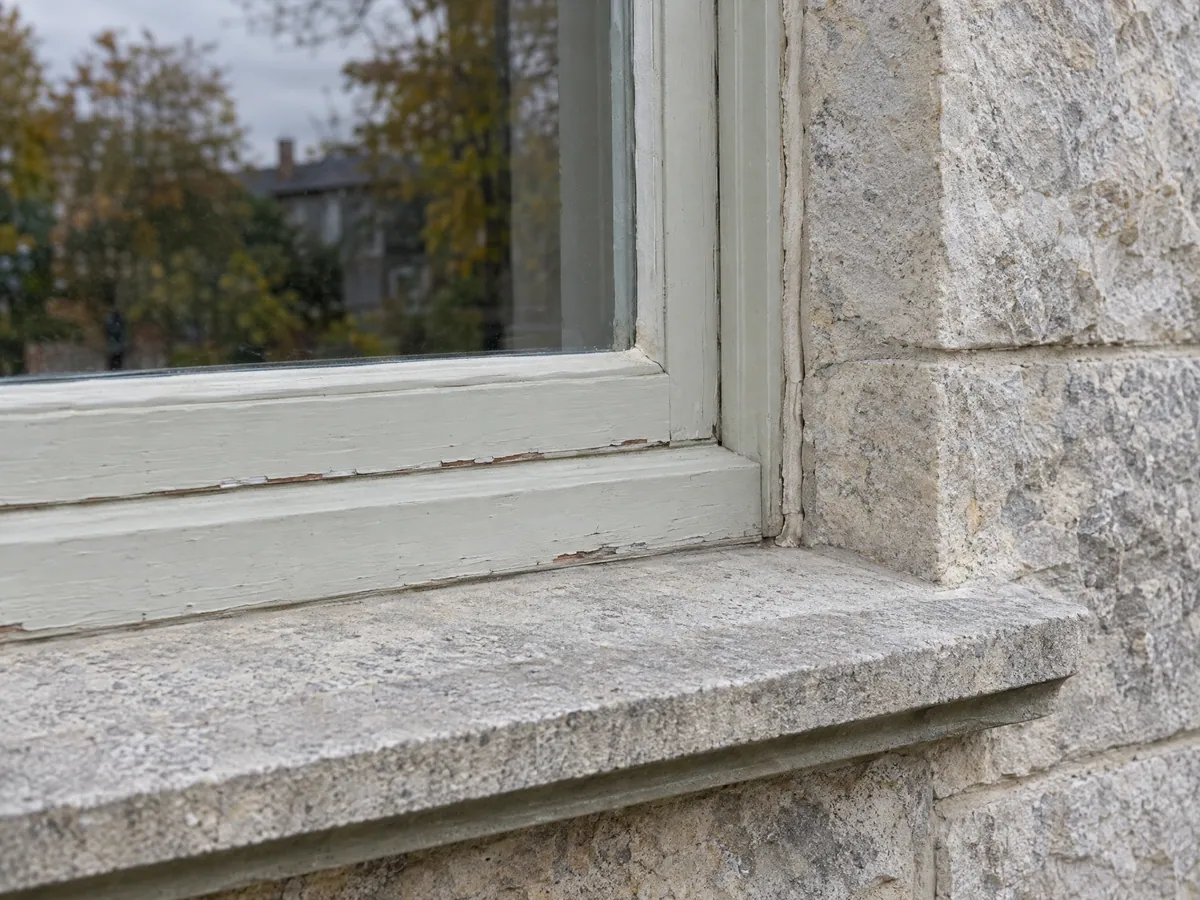
- Stone sills. A dressed sill sheds water away from the wall. The joint where the wood frame meets it has to stay sealed; water sitting there starts rot in the bottom rail.
- Lake wind. Houses near the water take wind straight off the lake, and it finds a loose sash or open joint first.
- Interior finishing. Plaster returns and old trim can be disturbed by a full replacement. A glass or sash repair leaves them alone.
Is your home designated, listed or in a district?
Heritage status comes in three forms, each with different obligations. Check yours on the City's Heritage Register or ask Heritage Planning.
- Designated individually under Part IV of the Ontario Heritage Act.
- Inside a Heritage Conservation District, designated under Part V.
- Listed on the register without being designated.
The City's conservation districts page describes Kingston's three districts. Routine maintenance needs no permit in them; staff approve minor alterations, and larger ones go to committee and Council. Portsmouth Village and Williamsville are not districts, although individual houses there can be designated.
Barriefield
Designated in 1981 and among Ontario's oldest districts, Barriefield Village faces Fort Henry. Its houses are mostly detached, one-and-a-half storeys, in wood or stone, so one street can mix wood and masonry openings. See Barriefield and Kingston East.
Market Square
Designated in 1985 and updated in 2013, this district covers downtown's 19th-century commercial and institutional buildings. Upper-floor windows and storefront glass may both need heritage review. See downtown Kingston and Market Square.
Old Sydenham
Established in 2015 and the largest of the three, Old Sydenham runs from Johnson and Barrie streets to King Street East and the lake. It holds many historic limestone houses, alongside student rentals. Sydenham Ward downtown is not the village of Sydenham north of the city. See Sydenham Ward.
Listed-only properties
A listed property that isn't designated needs no heritage permit for changes; the City asks for 60 days' notice before demolition. That can change: under the Ontario Heritage Act, municipalities have until 1 January 2027 to designate listed properties or remove them from the register. If yours is listed, confirm its status before replacing original windows.
Building permit or heritage permit: what applies to window work
Two different City approvals can touch a window job.
Building permits. The City's building permits page says replacing existing doors and windows of the same size, following property line regulations, needs no building permit, while creating or altering an opening does. The same page lists any work in a heritage district or on a heritage building as needing a permit.
Heritage permits. The City's heritage permits page requires one for changes to a designated property, including "altering or tearing down parts of a building, like the roof, porch, steps, windows or trim". Council-defined maintenance is exempt. For designated and district properties, heritage approval comes before any building permit.
Read side by side, those pages leave a grey area: what counts as maintenance on an old sash, and when heritage work also needs a building permit. We don't try to settle it here. Heritage Planning can, for your address, in one conversation.
The City's Window Renovations in Heritage Buildings Policy and how to request it
The City points heritage owners to a specific document, the Window Renovations in Heritage Buildings Policy. It isn't posted as a web page; you request it through MyKingston. We don't summarize it, because a policy you haven't read yourself is a poor basis for ordering windows.
When it arrives, read it with your own plan in mind:
- Does it say anything about your type of window, or about storm windows?
- Where does it draw the line between repair and replacement?
- What does it expect with an application: photos, drawings, product details?
Take those questions to Heritage Planning, then share the answers with the pro you're matched with.
Repair, restore or replace: options that respect the building
Window work on an old stone house falls into four kinds, from lightest to heaviest:
- Upkeep. Paint, putty, caulking at the stone joint, weatherstripping, freeing a stuck sash. Heritage Planning can confirm whether your job counts as exempt maintenance.
- Repair. Reglazing a cracked pane, new sash cords, splicing new wood into a rotted rail. The original sash stays.
- Restoration. Taking a sash apart, repairing its joints and reassembling it. More work, same window.
- Replacement. A new sash or window. On a designated or district property this is the step most likely to need a heritage permit, and Heritage Planning can say what the City would expect it to match.
Replacement is sometimes right: a sash rebuilt so often that little original is left, or rot through the frame. Wood window and sash repair covers the repair side, and the repair-or-replace guide weighs the paths more generally.
Storm windows and screens on heritage houses
On many stone houses in the core, storm windows over the original sash are the normal winter arrangement rather than an afterthought. The storm takes the weather first, keeps lake wind off the sash and its putty, and cuts drafts through the older sash behind it. Combination storms carry a window screen for summer, which saves swapping panels twice a year.
Fitting storms to a stone opening means measuring each one, because the openings vary. On a designated or district property, ask Heritage Planning whether new storm windows, or a change of material or colour, need approval before you order. If condensation forms between the sash and the storm in winter, that usually points to warm air leaking past the inner sash, which is a weatherstripping job. Storm windows covers the types and how they are fitted.
Heritage Property Grant and tax refund basics
The City's heritage grants and tax refund page describes two programs. Check it for current amounts and dates; some older City pages still show earlier figures.
- Heritage Property Grant. For properties designated under Part IV or Part V (contributing properties, in a district) or with a heritage easement, and tied to a heritage permit. A small-project stream opens first-come from 1 January each year; a large-project stream funds one project a year. The page says 2026 applications are closed and the 2027 large-project intake runs from 1 January to 31 March 2027.
- Heritage Property Tax Refund. For properties with a heritage easement agreement, refunding part of eligible conservation costs, no more than once every three years.
The order matters: talk to Heritage Planning, get the permit, then apply.
Before you book: call Heritage Planning and brief your pro
A short call saves a lot of backtracking. Heritage Planning's contact details, and the drop-in hours of the Heritage Resource Centre in City Hall's Market Wing, are on the City's heritage property conservation page. Have ready:
- your address and, if you know it, the property's status;
- photos of each window you're thinking about, outside and in;
- a plain description of what's wrong and what you'd like to do.
Then brief the pro. When you send a quote request, say whether the house is designated, listed or in a district, and what Heritage Planning told you. We pass it to an independent local pro who works on older windows, so the job and any paperwork can be planned around the approvals rather than after them.
Frequently asked questions
Is an old stone house automatically heritage-designated?
No. Age and limestone don't make a house designated, and a newer house inside a district can still be covered. Look the address up on the City's Heritage Register, check whether it falls inside Barriefield, Market Square or Old Sydenham, or ask Heritage Planning. The status decides which approvals apply to your windows.
One pane in a six-over-six sash is cracked. Does the whole sash have to go?
No. Each pane in a divided wood sash is held on its own with glazing points and putty, so a single cracked pane can be cut out and reglazed while the rest of the sash stays. It's a good moment to check the putty on the other panes too. Wood window and sash repair explains what's involved.
Does repainting and reglazing my sash count as maintenance or an alteration?
The City exempts work that Council defines as maintenance from a heritage permit, while altering windows on a designated property needs one. Many owners assume like-for-like repainting and reglazing is maintenance, but the definition is the City's, not ours. On a designated or district property, a quick call to Heritage Planning confirms it before work starts.
Why is there no simple answer on vinyl windows for heritage homes?
Because it depends on the property's status, the window involved and a City policy that is available only on request, so be cautious about any answer given without seeing the address. Request the Window Renovations in Heritage Buildings Policy, then ask Heritage Planning before ordering. Vinyl windows covers the product itself.
My house is listed but not designated. What does that change?
Today, a listed property doesn't need a heritage permit for changes; the City asks for notice before demolition. But Ontario has set 1 January 2027 as the deadline for municipalities to designate listed properties or take them off the register, so a status can change. Confirm yours with Heritage Planning before replacing original windows.
Which City program can help pay for restoring heritage windows?
The City's Heritage Property Grant, for designated properties (contributing ones, in a district) or those with a heritage easement, and always tied to a heritage permit. There is also a heritage tax refund where an easement agreement exists. Amounts and intake dates change, so check the grants page before planning around either.