Foggy thermal units
Haze inside the glass: when a new thermal unit is enough, and when it isn't
Glass shops in Kingston, Ontario tend to call the sealed glass in a window a thermal unit; thermal pane and sealed unit mean the same part. On a January morning, water beading on the room side of that glass is usually indoor humidity. Haze that sits between the panes and won't wipe off means the unit's edge seal has failed. The frame around it is often sound enough to take a new unit. We connect you with an independent Kingston-area glass pro who can confirm which you have and quote the fix.
- Often the glass alone, not the window
- Condensation and seal failure told apart
- Photo-first quotes from local glass pros
The January test
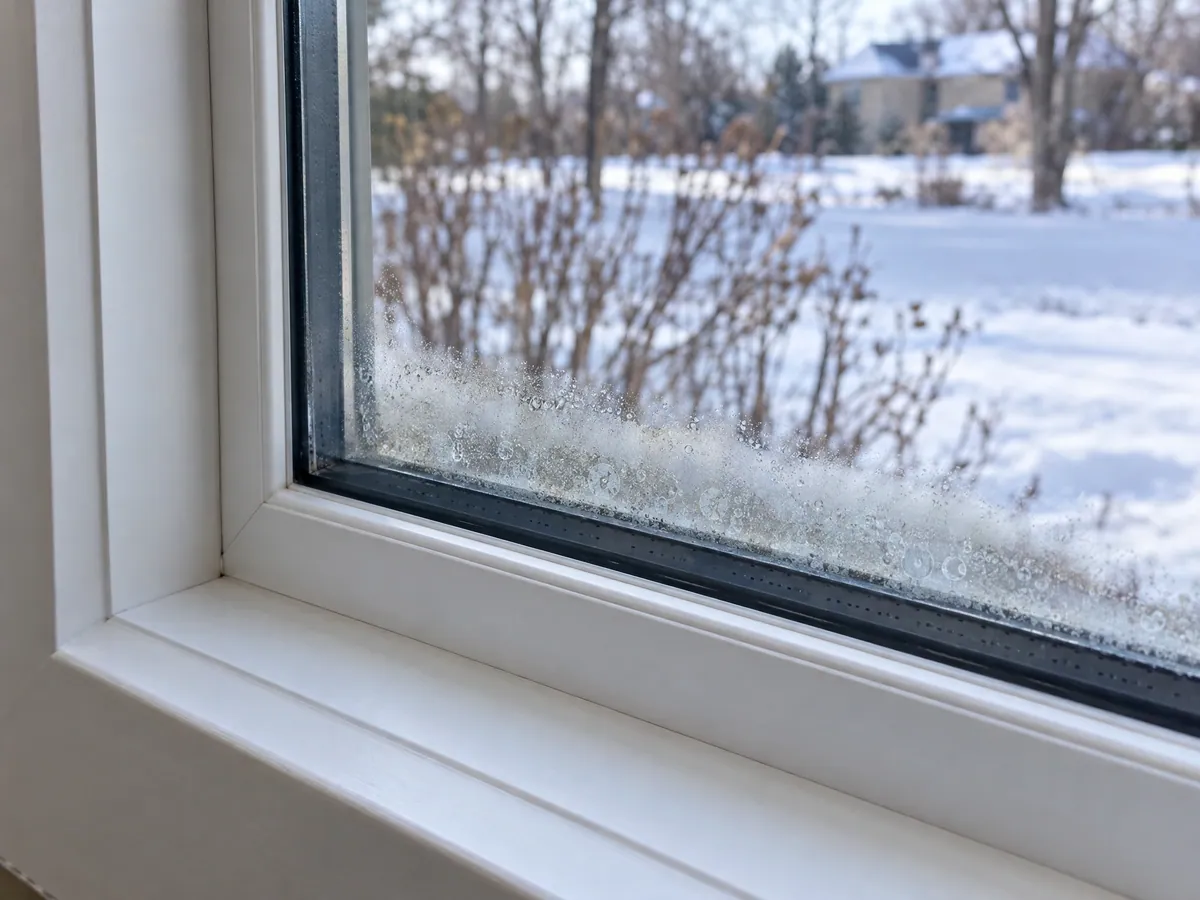
Condensation on the glass, or fog inside the unit?
On a cold morning, wipe the room side of the glass with a dry cloth. If the moisture comes away, it came from the house. If the glass still looks misty, the moisture is sealed inside the unit.
Room-side condensation on cold January nights
Sharp cold and humid lake air make beads of water on bedroom and bathroom glass common here. It wipes off: a ventilation question, not a failed window. Ice at the sash too? See window hardware and seal repairs.
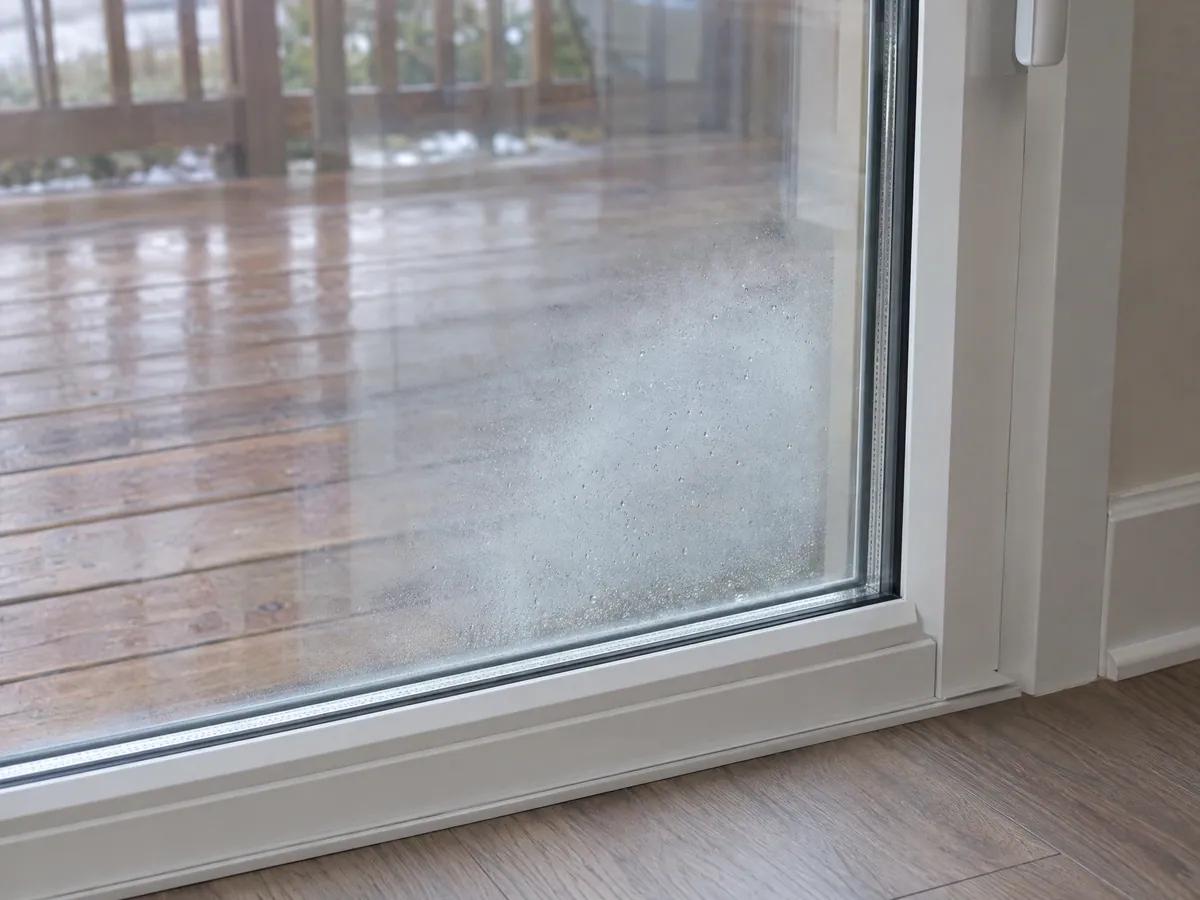
Haze, streaks or droplets between the panes
Fog that comes and goes with the weather, or a white film that stays put, means air has got past the edge seal. It won't clear by itself.
Why now
Why so many Kingston thermal units are failing now
A thermal unit is two or three panes held apart by a spacer and sealed at the edge. The dry space inside keeps it clear and insulating.
Kingston winters work that seal hard. The temperature crosses freezing again and again from late fall to spring, and each swing flexes the glass and the air inside. Humid lake air and a few rounds of freezing rain add to it.
Age does the rest. A large share of Kingston homes went up between the 1960s and 2000, and in the later suburbs, such as Bayridge and Collins Bay or Westbrook, many units have been in service a long time. A chipped edge can also let moisture in; a crack across the pane is a broken window glass job.
The stone-and-brick core is different. Single glass in wood sash usually sits behind a storm window, and mist between the two means room air is leaking past the inner sash. That calls for storm window and sash work, not a thermal unit.
The swap
What a thermal unit swap involves
When the pro we match you with recommends a new unit:
Measuring and ordering
The pro measures the glass, notes its thickness and coatings, and orders a unit made to that size. Expect two visits, one to measure and one to install; the quote comes with a realistic timeline.
The swap in the existing frame
The old unit comes out and the new one is set, shimmed and sealed in the same opening. Frame, trim and hardware stay.
Matching Low-E, gas fill and tempered glass where required
The new unit should match or improve on the old one: Low-E coating, gas fill, perhaps a warm-edge spacer. Sliding patio doors take safety glass, and the pro confirms what the current Ontario Building Code asks for.
Defogging, weighed
Defog kits and drilling: what they can and can't fix
Some services drill the glass, dry the space and plug the holes; kits do the same. It suits some windows, not others.
What it can do
Improve how a fogged unit looks with little disruption. Reasonable for one unit you'll live with for a while, or a window due for replacement anyway.
What it can't do
Restore the factory seal or the gas fill. Etched glass won't come clean. Ask what's guaranteed in writing before you pay.
Frame check
When the frame tells you to replace the window instead
New glass needs a frame that will outlast it. The pro checks:
Soft wood or split vinyl
Rot at the sill or corners, or cracked vinyl corners, means the new unit would sit in a failing frame.
Several units going at once
When most of the house is fogging, price replacement windows alongside new units.
Drafts or water at the edges
Leaks around the frame point past the glass. The repair or replace guide helps weigh it.
What affects the quote
What drives the cost of a sealed-unit replacement
Each unit is made to measure, so the quote depends on:
- Size and shape, including arched, oversized or patio door glass
- Double or triple glazing, Low-E, gas fill, tempering where required
- How many units, since several on one visit share the trip
- Access: upper floors, stairwells, units behind storm windows
- Frame condition, and whether the sash must come out
Rebates
Why rebates won't cover glass-only work
A new thermal unit in an old frame is a repair, and the programs pay for replacements. Ontario's Home Renovation Savings Program offers a rebate per rough opening for complete ENERGY STAR certified windows, generally with a home energy assessment and more than one upgrade. The City's Better Homes Kingston program isn't taking applications; watch for a relaunch.
So the glass-only fix is usually cheaper but earns nothing back. Confirm current rules on the program pages.
Fairly new window?
If the window is fairly new, check the warranty first
A unit that fogs within a few years of installation may be covered. Find the paperwork or the code on the spacer and call the installer before paying for new glass. If one opening keeps fogging, ask the pro to check the frame's drainage too.
Questions
Foggy thermal unit questions
Explore your options
More help with Kingston windows
Glass pros replace thermal units across the city and nearby, including Bayridge & Collins Bay, Westbrook & Cataraqui North, Kingscourt and Amherstview & Odessa.
Photos and measurements that speed up your quote
Send the whole window from inside, a close-up of one corner showing the spacer, the rough width and height of the glass, and which floor it's on. We pass it to a local glass pro who replaces thermal units, and they come back with a quote. If a new unit is all it needs, that's what they'll quote.