Custom mirrors · Kingston
Custom mirrors, measured for walls that aren't quite square
A custom mirror is cut from a sheet to your size, finished at the edge and fixed with hardware that suits its weight. Most of the skill is in the measuring, particularly in older Kingston houses where walls lean and corners wander. We connect you with an independent local glass professional who cuts and hangs mirrors, one of the glass services we match; they confirm the size and quote the job.
- Sized to your wall, not a catalogue
- Polished, bevelled or framed edges
- Spotted mirrors replaced, frames kept
Where they go
Bathrooms, gym walls, closets and awkward alcoves
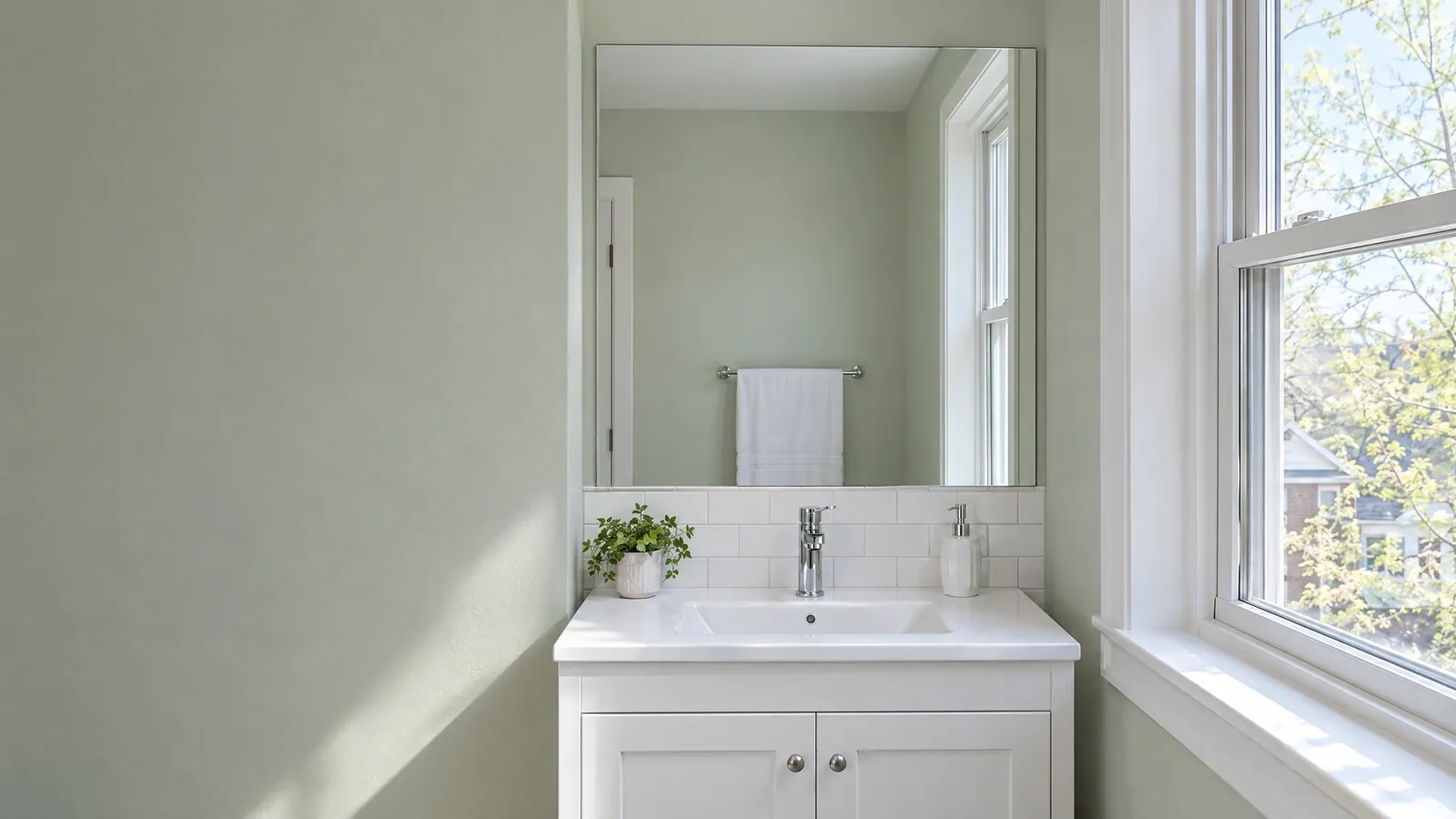
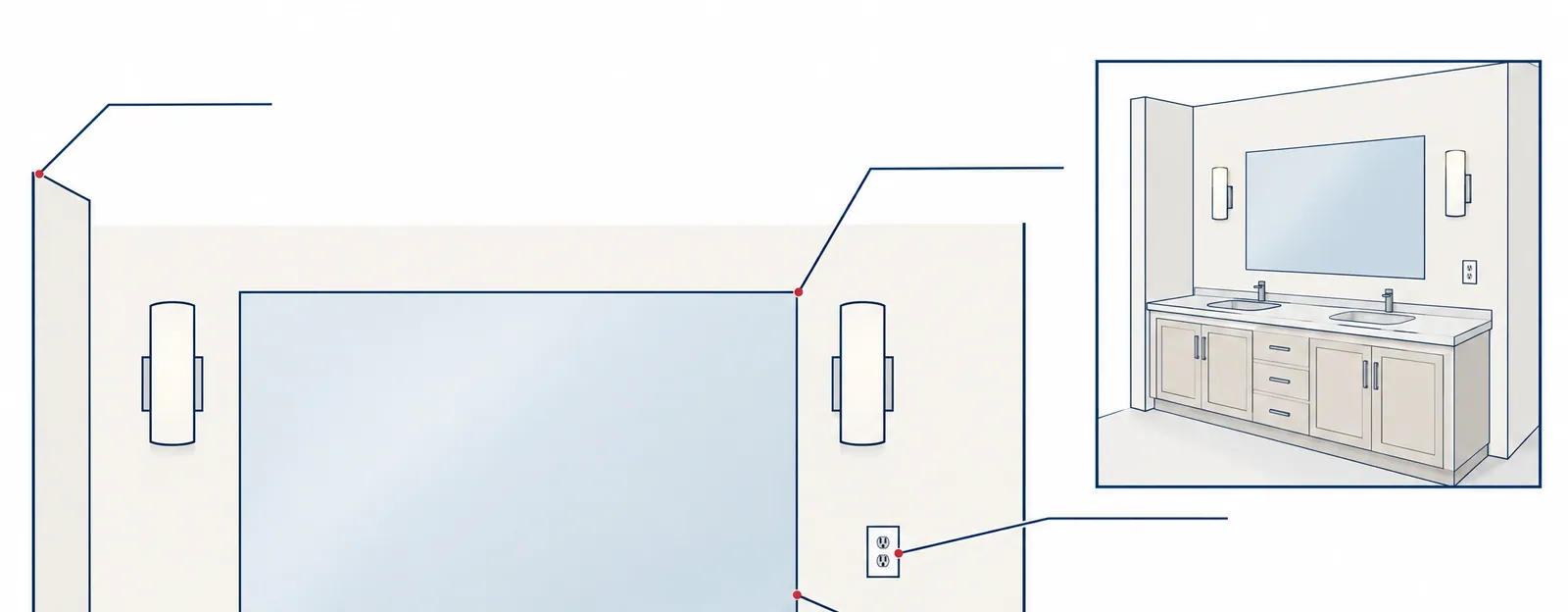
Over the vanity
Sized to the vanity and the lights rather than a catalogue, with cut-outs for an outlet or switch if needed.
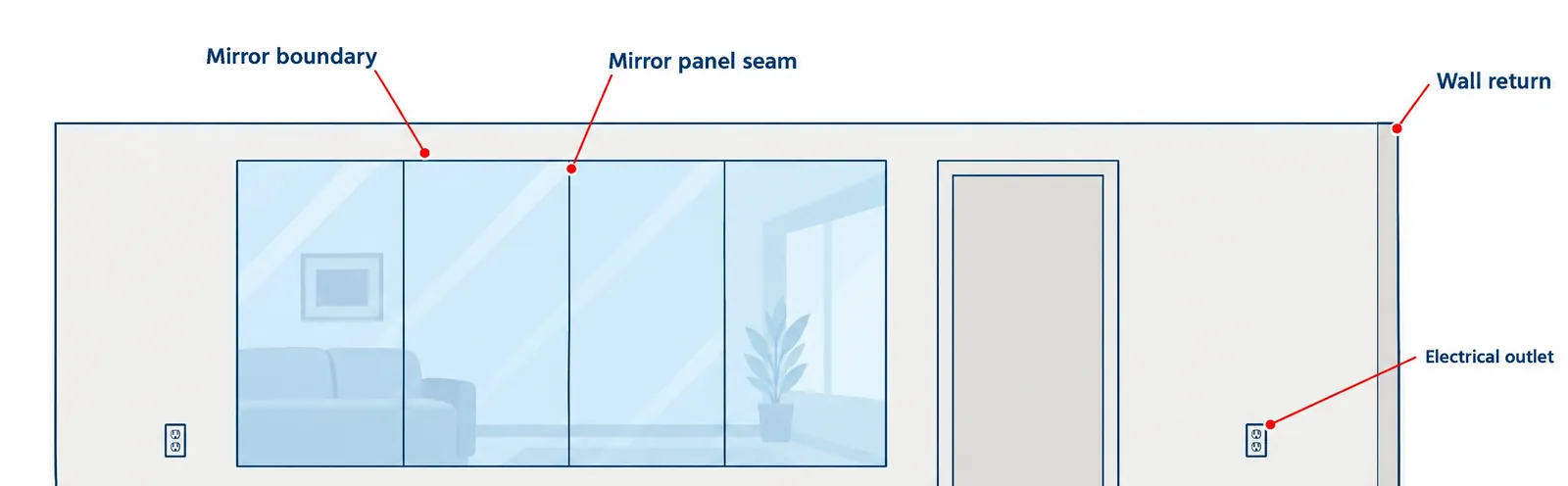
Full walls and home gyms
Done in several panels with tight seams, so each piece can be carried in safely. The layout decides where seams fall.
Closet doors
Sliding and bifold mirror doors have their own page on closet door rollers and panels.
Alcoves, landings and dormers
Older houses are full of spaces no stock mirror fits. A cardboard template of the opening beats a tape measure.
Edge work
Polished, bevelled or framed: finishing the edge
A freshly cut mirror edge is sharp, so it's always finished one way or another.
Polished edge
Ground smooth and polished. Plain and neat, and the usual choice for a frameless bathroom mirror.
Bevelled edge
An angled band ground around the face that catches the light. More work, and suited to a mirror standing alone on a wall.
Framed
Wood or metal covers the edge. Useful for matching older trim, or where the edge would take knocks.
Measuring
Taking measurements on an out-of-square wall
A mirror is a rigid rectangle. Plaster walls in older houses rarely are, so a few careful numbers tell the pro how much room to leave.
Measure three times each way
Take the width across the top, middle and bottom, and the height at both sides and the centre. The smallest number counts.
Note what's in the way
Lights, outlets, switches, a window casing or a backsplash lip, each measured from one corner.
Check for a lean
A level against the wall shows whether a corner is out of plumb. If it is, the pro may leave an even reveal rather than butt the glass into it.
Mounting
Clips, channels and adhesive, matched to the wall
Plaster and lath
Common in pre-war houses. Fixings must reach something solid, and a large mirror may sit on a bottom channel.
Drywall
Clips and anchors suit most sizes; heavy mirrors go into studs or onto a channel.
Tile and concrete
Both need the right drill bit. Concrete walls, found in some apartment buildings, hold well once drilled.
Adhesive and backing
Mirror adhesive supports mechanical fixings rather than replacing them; the wrong kind attacks the silver. A safety film on the back holds pieces if the glass breaks.
Older mirrors
Black spots, cracks and chips in an older mirror
Dark spots creeping in from the edge mean the silver backing is corroding, usually from moisture or harsh cleaners. It can't be patched, so the glass is replaced with a new mirror cut to the same size.
The frame usually stays. A medicine cabinet door, a framed hall mirror or a dresser mirror can take new glass, and in an older piece the frame is often what's worth keeping. Landlords can fold this into a turnover; the move-out repair guide groups it with other glass jobs.
What affects the quote
Size, edge and wall: the parts of a mirror quote
Every mirror is cut to order, so the price follows the piece and the wall:
- Overall size, and a single sheet or several panels
- Glass thickness, and any tint or low-iron glass
- Edge finish: polished, bevelled or framed
- Cut-outs for outlets or switches, and corner notches
- Safety backing and mounting hardware
- Installation height, stairs and how the panel gets into the room
Measure the wall at the top, middle and bottom and send the numbers with a photo.
Questions
Custom mirror questions
Explore your options
More mirror and glass work
Pros cut and hang mirrors in houses and apartments across Kingston, including Sydenham Ward, University District, Williamsville, Kingscourt and Westbrook & Cataraqui North.
Send three measurements and a photo
Measure the wall at the top, middle and bottom, and note anything the mirror must fit around. We'll send it to a local glass pro who cuts and hangs mirrors, and they'll reply with a quote.